

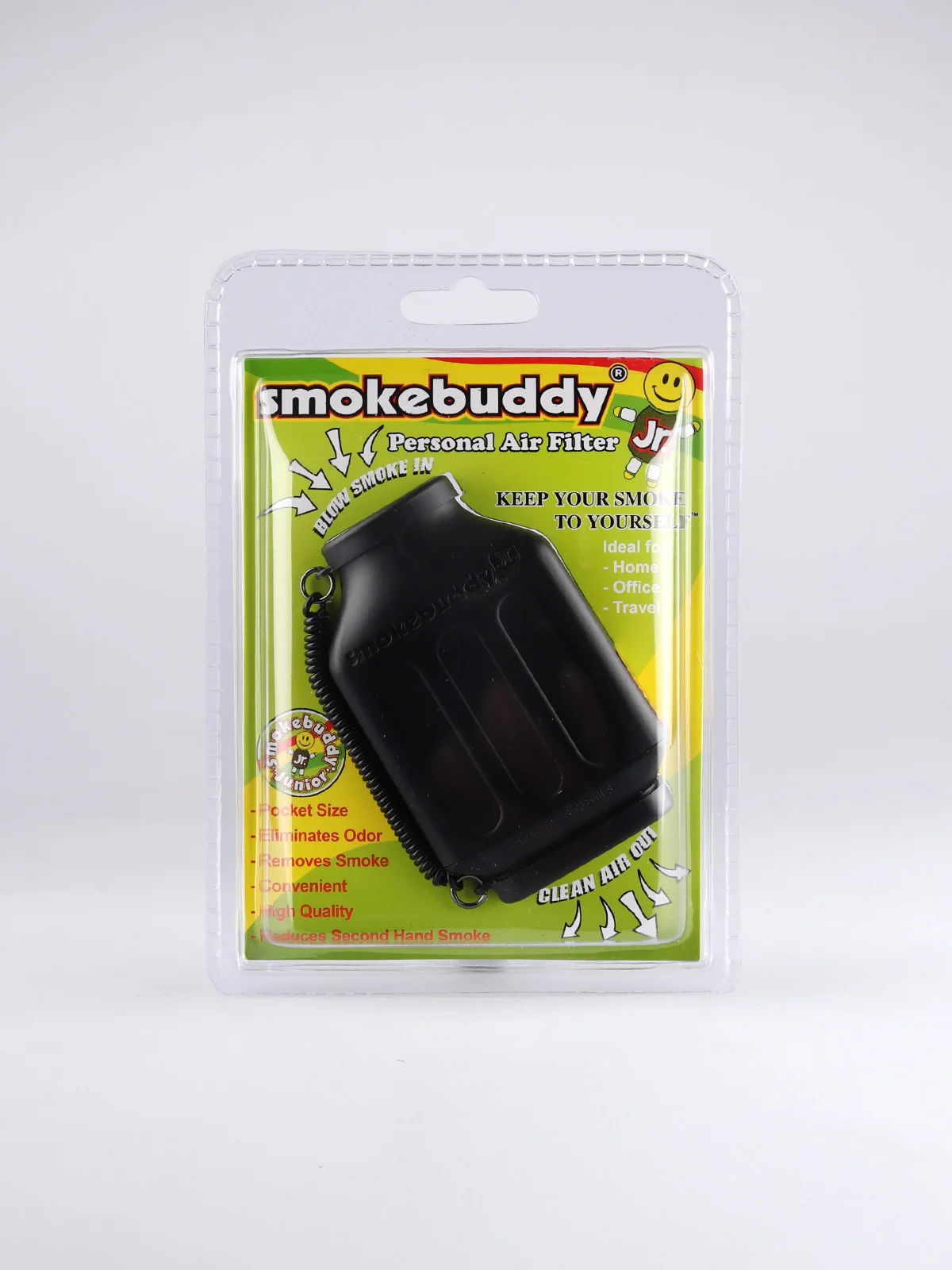
Looking for the best personal air filter for smoke? You’re probably wondering if these small devices can actually control odor or if they’re just marketing hype. Here’s all you need to know before you purchase.
Quick Answer: Do Personal Air Filters Remove Smoke Odor?
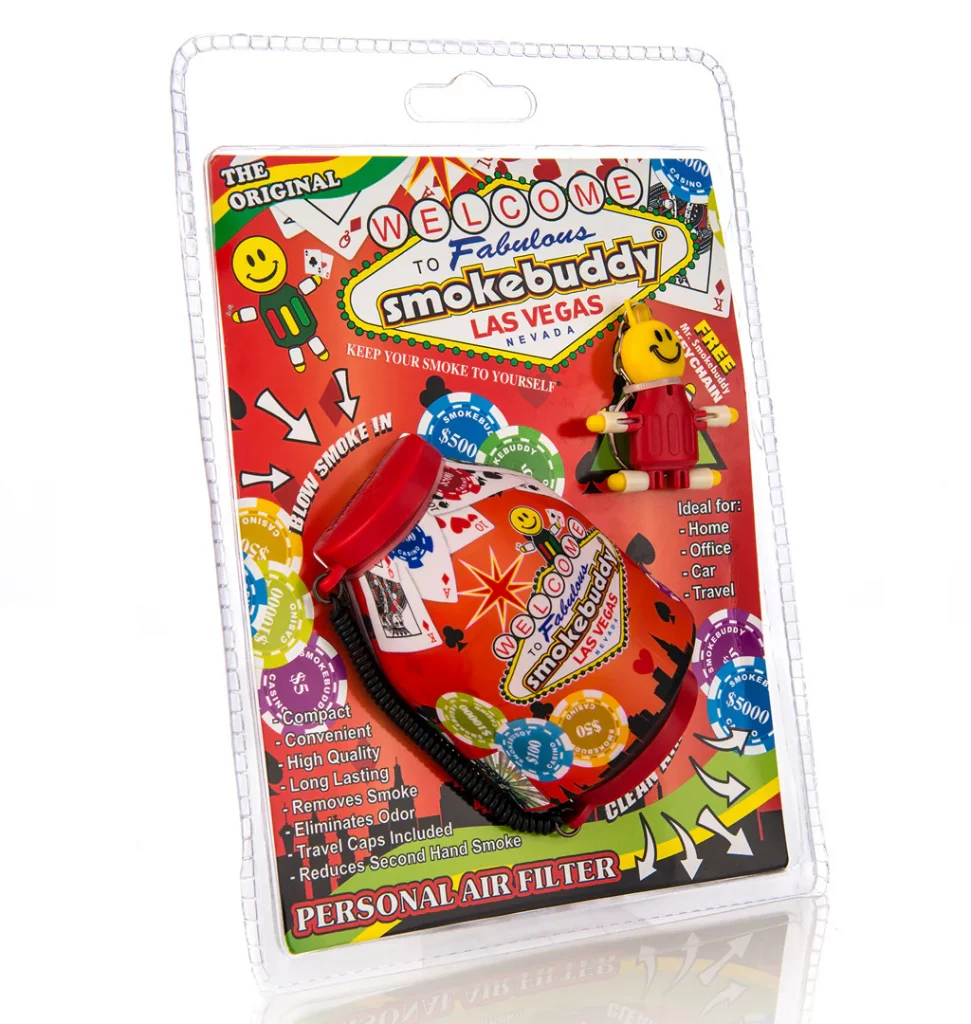
Yes, personal air filters can reduce visible smoke and minimize odor, but let’s be clear: they won’t make smoke disappear completely or turn your space into an odor-free zone.
These devices work by filtering the smoke you exhale through activated carbon and other materials that trap particles and smell molecules. When used correctly, they noticeably reduce the smoke cloud and cut down on that lingering smell. But they’re not magic. They’re a harm-reduction tool, not an invisibility cloak for smoke.
If you want to purchase the best personal air filter for smoke, check out Smokebuddy. This is a leading creator of personal air filters, and they are running a sale indefinitely. Use SLY25 for your next purchase to get 25% off.
What Does the Personal Air Filter for Smoke Mean?
There’s some confusion around this term, so let’s clarify it for you. When most people search for the best personal air filter for smoke, they’re looking for handheld devices that you exhale directly into after smoking. These aren’t room air purifiers; they’re high quality personal smoke filtration tools.
They are also often called:
- Smoke filters
- Personal smoke filters
- Exhale smoke filters
- Sploof (though that usually refers to DIY versions)
The key thing to understand is that the best personal air filter for smoke is designed for exhaled smoke only. They filter what comes out of your mouth, not what’s already in the air around you. Think of them as a targeted solution for the moment you exhale, not a replacement for proper ventilation.
What Makes a Personal Air Filter for Smoke the Best?
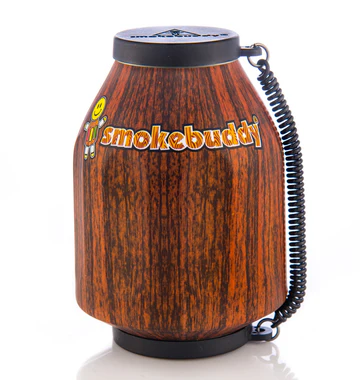
Not all filters are created equal. Here are the things that separate the best personal air filter for smoke from the cheap gimmicks:
Activated Carbon (Charcoal)
This is non-negotiable with the best personal air filter for smoke. Activated carbon is what actually traps odor molecules, not just smoke particles. It works through a process called adsorption, where smell molecules bind to the massive surface area of the carbon material. Without quality activated carbon, you’re just blowing smoke through a fancy tube.
HEPA or Multi-Layer Filters
While activated carbon handles odor, HEPA or multi-layer filtration reduces visible smoke particles. The best filters combine both technologies. You want something that catches the big particles and the tiny smell molecules at the same time.
Tight Airflow Design
If air can escape around the sides of the filter instead of passing through it, the whole thing is pointless. Look for filters with a snug mouthpiece design that forces all exhaled air through the filtration media, not past it.
Replaceable Filters with Decent Lifespan
Filters clog. Carbon gets saturated. A “best” filter that only works for three uses isn’t best at all, it’s expensive and wasteful. Check how many uses you get per filter and whether replacements are affordable and available.
What the Best Personal Air Filter for Smoke CAN Do
A function air filter can:
Reduce visible smoke clouds dramatically
You’ll exhale significantly less visible smoke, which helps with discretion.
Lower strong odors immediately after exhaling
The smell won’t be completely gone, but it’ll be much less intense.
Provide discretion in situations where it matters
If you need to minimize smoke and smell quickly, these help.
These benefits are real, but they’re conditional. They work better when you use the best filter for smoking correctly and combine it with other odor-control strategies.
What The Best Personal Air Filter for Smoke CANNOT Do (And This Is Very Important)
Here’s where many people get disappointed because they expected too much:
They cannot remove the smoke already in the room
Once smoke escapes into the air, a personal filter won’t pull it back out. That requires a room air purifier.
They can not stop the smell from sticking to clothing or hair
Smoke particles land on you before you even exhale. A filter doesn’t protect you from becoming the source of the smell.
They cannot fully replace ventilation
Even with a perfect filter, you still need airflow. Stale, smoky air in a sealed room will smell, filtered exhale or not.
They cannot make indoor smoking “odor-free”
There will always be some residual smell. Anyone walking into the room will likely still notice something, even if it’s faint.
Best Situations to Use a Personal Air Filter for Smoke
The best personal air filter for smoke is best used in:
Small spaces with some airflow, like a bathroom with the fan running or a bedroom with a cracked window. The filter reduces what you contribute, and ventilation handles the rest.
Quick sessions, not marathon smoking. A few exhales through a fresh filter works great. Chain-smoking for an hour will overwhelm any filter.
When combined with open windows or a fan. The filter catches your exhale and the airflow moves lingering particles out. Together, they’re effective.
Situations Where a Personal Air Filter Don’t Work Well
Don’t expect good results in these cases:
Closed rooms with zero airflow. The smell has nowhere to go, and it’ll build up no matter how good your filter is.
Long sessions with heavy smoke. Filters saturate quickly under heavy use. One filter cartridge won’t handle an entire evening.
When users don’t exhale directly into the filter. If you’re lazy about using it properly, you’re wasting your money. Every bit of smoke that escapes unfiltered adds to the odor.
Extra Ways to Control Smoke Odor (Beyond Personal Filters)
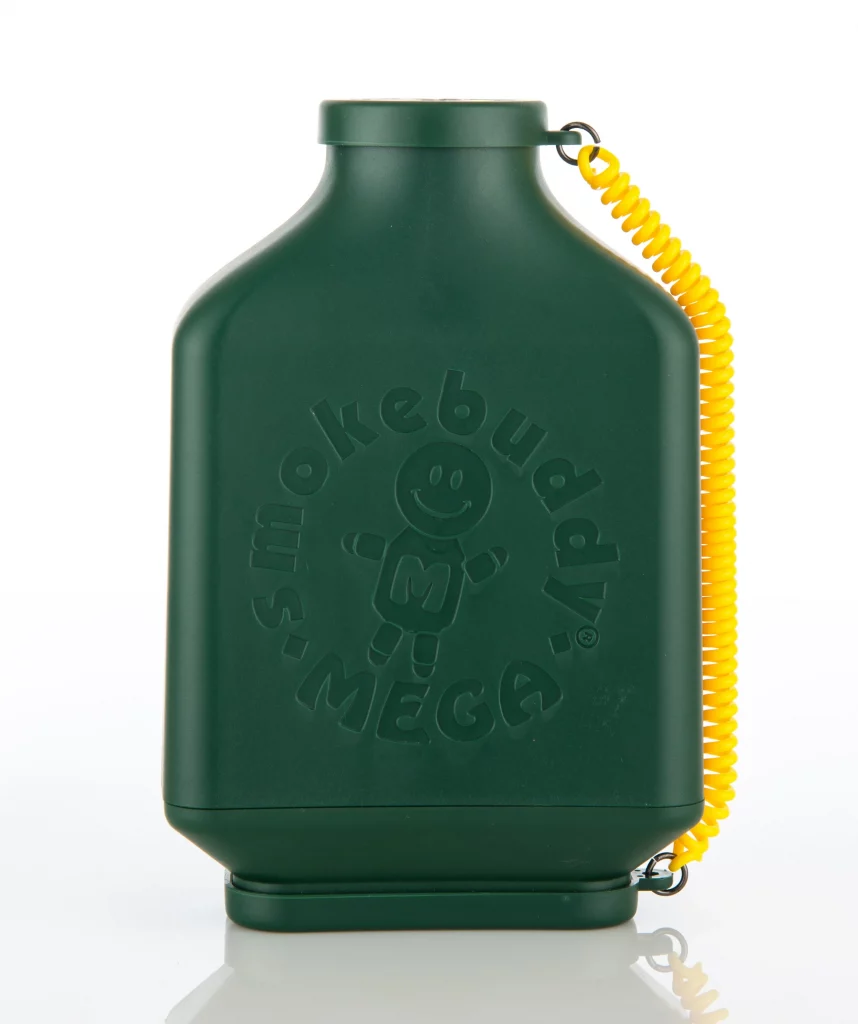
The best personal air filter for smoke is most effective when it’s part of a complete odor control strategy:
Ventilation is king
Open a window. Run a fan. Create airflow that pushes smoke particles outside instead of letting them settle indoors.
Room air purifiers with carbon filters
These clean the air that escapes your personal filter. Look for units specifically rated for smoke.
Wash your hands and change clothes
Smoke sticks to you. A clean filter won’t help if you’re walking around smelling like an ashtray.
Proper storage and sealing
If you’re storing smoking materials indoors, keep them sealed. Residual smell from storage adds to the problem.
How to Choose the Best Personal Air Filter
Use this checklist as your basic requirements when shopping
- Does it use activated carbon? If not, skip it.
- How many uses per filter? More uses = better value.
- Is it easy to carry and use? Bulky or awkward designs won’t get used consistently.
- Does it feel airtight when used? Air leaks = wasted filtration.
Read reviews that mention longevity and actual odor reduction, not just marketing claims. The best filter is the one you’ll actually use every single time.
Final Takeaway
Personal smoke filters help control odor and reduce visible smoke, but they’re not a magic solution. The best personal air filter for smoke is one with strong activated carbon filtration, a tight seal, and a reasonable filter lifespan.
Combine it with proper ventilation, regular cleaning, and realistic expectations, and you’ll see real results. Choose wisely, use it consistently, and ventilate well. That’s the formula that actually works.
FAQs
How long does a personal smoke filter last?
It depends on the filter quality and how heavily you use it. Most disposable filters last 50-150 exhales before they lose effectiveness. Reusable filters with replaceable cartridges can last months, but the cartridges themselves need changing every 20-50 uses on average.
Can I make my own smoke filter at home?
Yes, the classic DIY version uses dryer sheets stuffed into a cardboard tube. It reduces some odor but won’t be as effective as a proper filter with activated carbon. If you’re serious about odor control, invest in a real filter.
Do these filters work for vaping too?
Yes, but vaping produces different particles than traditional smoke. Most personal air filters handle vapor clouds well, though odor control depends on what you’re vaping. Filters designed for smoke will work, but longevity may vary.
What’s the difference between a personal smoke filter and a room air purifier?
A personal smoke filter captures smoke as you exhale directly into it. A room air purifier cleans the air in your entire space over time. For best odor control, use both: filter your exhale, then purify what escapes into the room.
Are expensive filters worth it, or do cheap ones work just as well?
You get what you pay for. Cheap filters often use minimal carbon, leak air around the edges, and clog quickly. Quality filters cost more upfront but last longer and actually control odor. A $5 filter that dies after 10 uses costs more than a $20 filter that handles 100 when you factor in their replacement costs.