

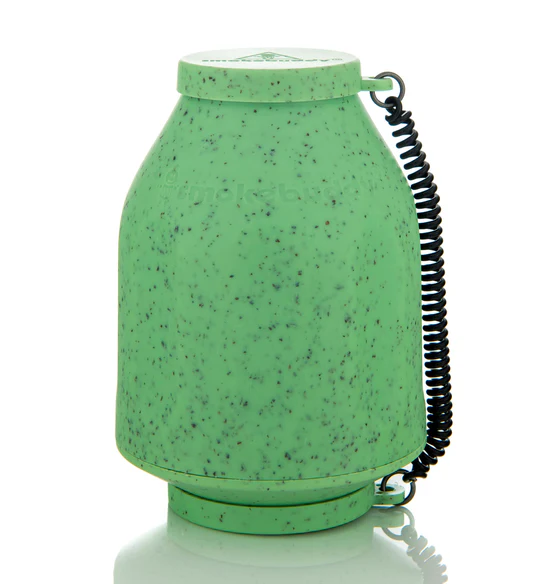
Have you ever sat in your smoky room during a session and wondered if the window you opened was even doing anything? As specific as it sounds, it’s actually a thought process common among smokers who share their space with others, have neighbors close by, or care about the air quality in their homes.
Whether you smoke herb, flower, or anything in between, as long as it gives off smoke, your room is bound to get hazy. To solve issues like this, personal smoke filters and air purifiers were developed to handle the puffs your window could not puff out.
At first glance, both seem like they’re trying to solve the same problem. Although they are, they do it in very different ways. Those different methods are what drive today’s personal smoke filter vs air purifier debate.
What does each device do? Where do they shine? How do they work? Which is more expensive? Which one makes the most sense to have? And many more are what this guide is going to cover. Once you understand all that, choosing the right tool for yourself becomes a lot easier.
When you do decide which of the devices you want, or both, getting quality products from certified and tested sources can be a hassle. Luckily, Smokebuddy, a brand renowned for its quality, is offering a 25% discount on all products this period. Use the coupon code SLY25 at checkout to get this offer for yourself.
What Is a Personal Smoke Filter?
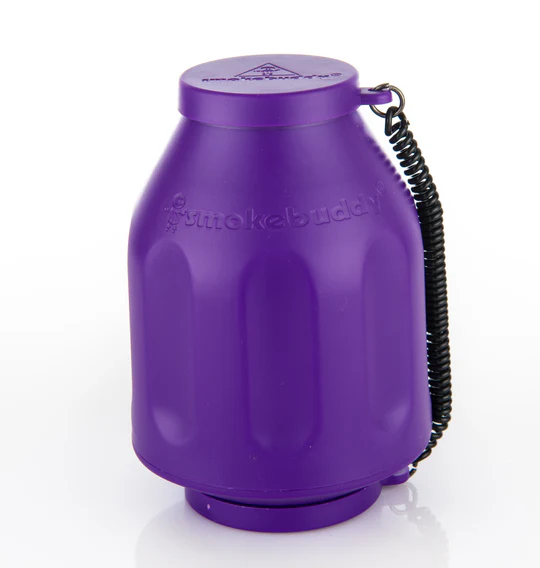
A personal smoke filter, sometimes called a sploof or smoke buddy, is a small, handheld device that you exhale directly into after taking a hit. The idea behind it is that you breathe out through the filter, and it traps the smoke and odor before it floats around the room and settles into everything.
How It Works
Most personal smoke filters are packed with activated carbon, which is really good at absorbing odors and smoke particles. Some higher-end versions use multiple filtration layers for better results. When you exhale through it, the smoke passes through those layers and comes out the other end significantly cleaner, and in some cases, nearly invisible.
Who It’s Built For
Personal smoke filters are a go-to for people who want quick, discreet control over their exhaled smoke. They’re compact, easy to carry, and don’t require a power outlet. Popular options include the smoke filters, DIY sploofs made from dryer sheets and toilet paper rolls, and branded carbon-filter tubes. If you’re in a pinch or just want something low-maintenance, this kind of device is hard to beat.
What Is an Air Purifier?
An air purifier is a plug-in appliance that continuously pulls air from the room, filters it, and pushes clean air back out. It works passively in the background. You turn it on, and it quietly handles the air quality in your space without having you do anything extra.
How It Works
Most air purifiers built for smoke use a combination of HEPA filters and activated carbon filters. The HEPA filter captures fine particles, like ash and smoke residue, while the activated carbon layer tackles odors and volatile compounds. Some units also include pre-filters to catch larger debris and extend the life of the main filters.
Who It’s Built For
Air purifiers are best suited for people who want consistent, room-wide air quality improvement. They’re especially useful for shared spaces, apartments with limited ventilation, or anyone who smokes regularly and wants to keep the overall air in the room cleaner over time. They’re not portable or discreet, but they work around the clock without any extra effort on your part.
Personal Smoke Filter vs Air Purifier: The Core Difference
The key distinction between the two is that a personal smoke filter works at the source, which is your mouth, while an air purifier works in the room. These two approaches target the same problem from completely different angles.
When you exhale into a personal smoke filter, you’re stopping smoke from entering the room in the first place. That’s source control. An air purifier, on the other hand, lets smoke enter the room and then tries to clean it up after the fact. Both have a role to play, but understanding this difference is what helps you figure out which one, or if a combination, fits your situation best.
In the personal smoke filter vs air purifier debate, neither device is objectively better. They serve different, sometimes overlapping purposes. The right choice depends on where you smoke, who you live with, and what kind of experience you’re after.
Personal Smoke Filter vs Air Purifier: How Well Do They Actually Work?
Effectiveness is the big question when comparing a personal smoke filter vs air purifier. The honest answer to that question is that both work well, within their limits.
Personal Smoke Filter Performance
A quality personal smoke filter does a solid job at trapping exhaled smoke and cutting down on odor at the source. Higher-end models can filter exhaled hits down to very little visible smoke. That said, they only capture what you exhale through them. Any smoke from the lit end of a cigarette or bowl, sometimes called sidestream smoke, floats freely into the room and won’t be captured by the filter at all.
Air Purifier Performance
Air purifiers are better suited for dealing with ambient smoke. That’s the kind that’s already floating around the room. A good unit with a solid HEPA and activated carbon combo can cause a sizeable difference in air quality and reduce lingering odors over time. The downside is speed, which is their clean air delivery rate (CADR). Purifiers with a higher CADR can exchange the air in the room several times an hour.
Some air purifiers also emit Ozone. Look for models that are explicitly ‘ozone-free,’ since ionizers/ozone generators can be irritating in enclosed spaces.
Personal Smoke Filter vs Air Purifier: Cost Breakdown and Outlook
Budget plays a big role in the personal smoke filter vs air purifier decision. Fortunately, you can have a clear answer depending on how much you’re willing to spend upfront.
Personal Smoke Filter Cost
Personal smoke filters are the budget-friendly option. Basic models start around $10, while premium options like the Smokebuddy Original run closer to $20–$25. Many filters have replaceable cartridges, so you don’t have to buy a whole new unit when the filter is used up, just swap out the insert. Over time, the running costs are low.
Air Purifier Cost
Air purifiers are a bigger upfront investment. Entry-level models designed for small rooms start around $50–$80, while mid-range to high-quality units that actually handle smoke well can run anywhere from $100 to $300 or more. On top of that, replacement filters typically cost $20–$60 every few months, depending on usage. It adds up, but the value is there if you need consistent room-wide air cleaning.
What Makes Sense for Your Budget
If you’re working with a tight budget, a personal smoke filter is the smarter starting point. If you have the resources and want a more hands-off, full-room solution, an air purifier is worth the investment. And if you can swing both, you’ll get the most complete setup available.
Personal Smoke Filter vs Air Purifier: Which One Is Right for You?
When it comes to the personal smoke filter vs air purifier decision, it really comes down to your specific situation. Here’s a quick way to think it through:
Choose a Personal Smoke Filter If….
- You smoke solo,
- You’re on a budget,
- You need something portable and low-key, or
- You mainly care about controlling what you exhale.
Personal filters are ideal for apartments, dorms, or any situation where you need discreet, on-the-spot control without any setup.
Choose an Air Purifier If…
- You smoke regularly in the same space,
- You live with other people,
- You have pets or kids in the home, or
- You’re dealing with a persistent smoke smell.
An air purifier handles the ambient side of things and keeps the overall air in the room from building up smoke and odor over time.
Consider Both If…
- You want the most complete solution possible,
- If room-wide air quality matters to you.
Using a personal smoke filter at the point of exhale and running an air purifier in the background covers both source control and ambient cleanup, making things very, very easy for both devices.
Final Thoughts
The personal smoke filter vs air purifier debate doesn’t have a one-size-fits-all answer, and that’s actually a good thing. It means you have options. You can pick the tool that genuinely fits your lifestyle and budget.
If you want fast, portable, on-the-spot odor control, a personal smoke filter is your best bet. If you want cleaner room air over time with zero effort on your part, an air purifier is the right move. If you also want the full package, running both together gives you the most well-rounded smoke management setup you can put together.
Whatever you decide, knowing the difference puts you ahead. You’re not guessing, you’re choosing with purpose. And that always makes for a better experience.
FAQs
Does a personal smoke filter completely remove the smoke smell?
No, it does not. A personal smoke filter significantly reduces smoke and odor from your exhaled hits, but it doesn’t eliminate the smell. It’s a great tool for minimizing the odor from the smoke you exhale.
What type of air purifier works best for smoke?
Air purifiers that use both a true HEPA filter and an activated carbon filter are the most effective for smoke. The HEPA layer captures fine particles and ash, while the activated carbon handles odors and volatile compounds. Look for units specifically marketed for smoke or odor control, as these tend to have higher-grade carbon filtration compared to standard air purifiers.
How long does a personal smoke filter last?
That depends on how often you use it. Most personal smoke filters last anywhere from 300 to 600 uses before the activated carbon becomes saturated and stops working as effectively. When it’s time for a replacement, you’ll notice a reduced resistance when you exhale through it. You’ll also notice smoke passing through more visibly than before.
Is a personal smoke filter worth it for occasional smokers?
Absolutely. For occasional smokers, a personal smoke filter is one of the most practical and affordable tools available. It’s low-cost, low-maintenance, and handles exactly what occasional smokers need, which is quick, discreet odor control without committing to the expense of a full air purifier setup. A basic model in the $10–$25 range is plenty for lighter, less frequent use.
Can an air purifier remove the smell from furniture and walls?
An air purifier cleans airborne particles and odors, but it can’t extract smoke that has already been absorbed into porous surfaces like fabric, curtains, carpets, or walls. For deep-set smoke odors in furniture or surfaces, you’ll need to clean or treat those materials directly. That said, running an air purifier consistently helps prevent new smoke odors from settling into your space over time.