

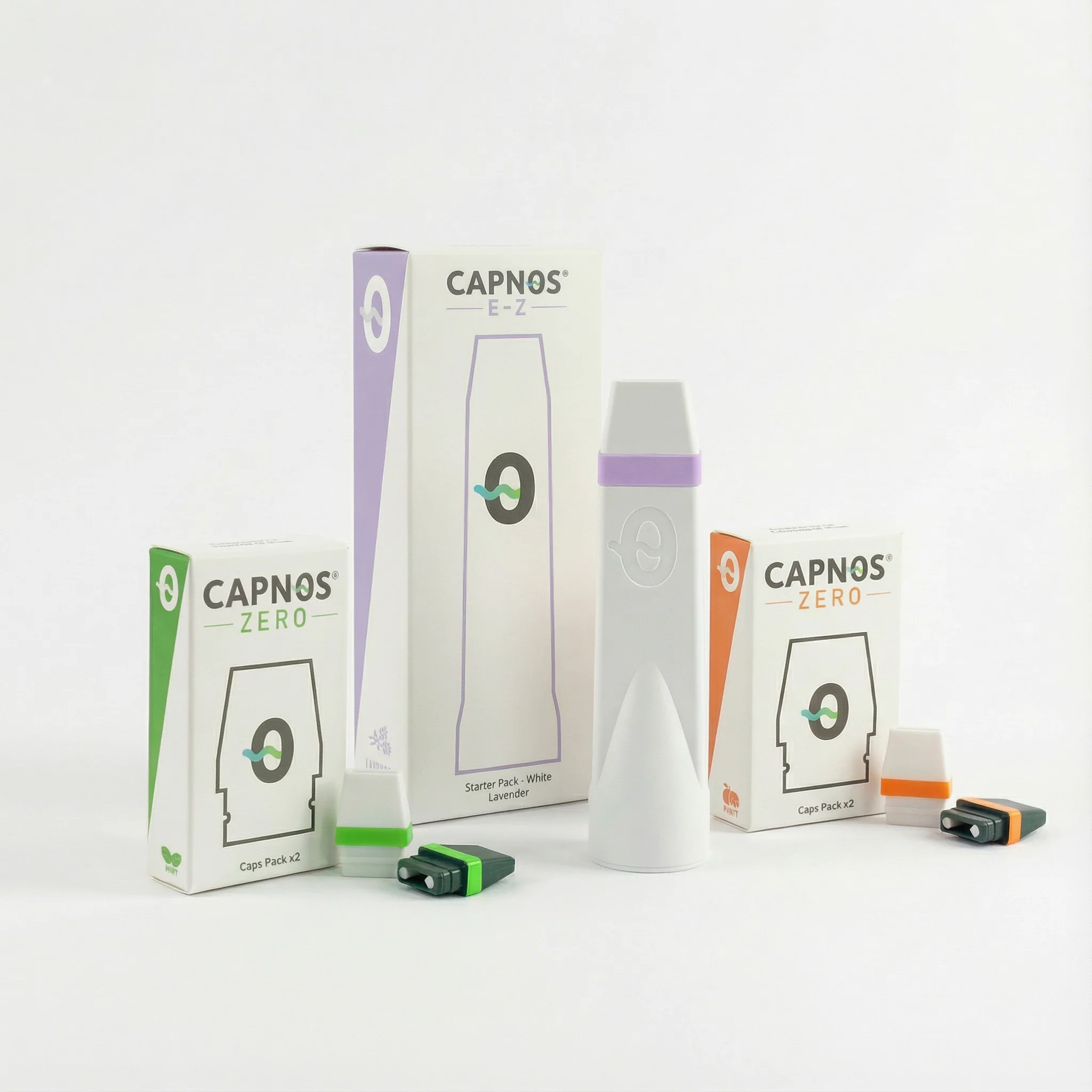
Pressurized air inhalers are designed for people who want the physical ritual of vaping without smoke, vapor, nicotine, or combustion. These devices focus on airflow, throat sensation, and controlled breathing rather than chemical delivery.
Pressurized air inhalers are often misunderstood because they resemble vapes, but the internal function and purpose are different.
This guide explains how to use pressurized air inhalers specifically as designed by CAPNOS, the frontrunner in the zeroing-in initiative, with clear instructions, practical use cases, safety context, and common adjustments beginners should understand.
If you’re thinking about giving CAPNOS a try, don’t forget to use EXHALE15 to get 15% off your next checkout.
Understanding How Pressurized Air Inhalers Work
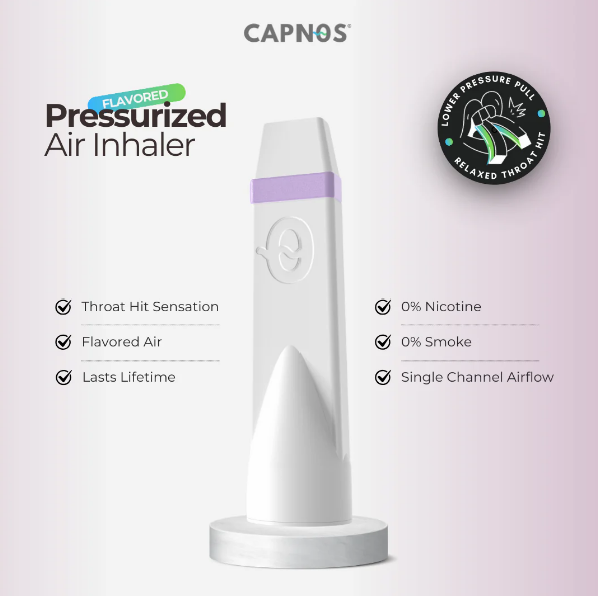
Before learning how to use pressurized air inhalers, it helps to understand what happens inside the device during a pull. Pressurized air inhalers contain no heating element, no battery, and no aerosol-producing components. The device operates through airflow resistance and a silicone valve system that creates a throat hit sensation.
When air is drawn through the device, the valve opens under pressure. This creates resistance that mimics the sensation of inhaling from a vape. The sensation comes from airflow dynamics rather than vapor or smoke. The air entering the lungs is the same ambient air already present in the surrounding environment.
Because there is no combustion or heating, no smoke or vapor is produced during exhalation. This design allows users to engage in the physical act of inhaling and exhaling without introducing substances into the lungs. .
For many people, this addresses the behavioral aspect associated with vaping habits rather than chemical dependence.
The Role of the Silicone Valve System
The valve inside CAPNOS pressurized air inhalers is central to the experience. It remains closed at rest and opens when sufficient inhalation pressure is applied. This opening action creates the audible pop that many users associate with proper airflow.
The resistance produced by the valve is intentional. It forces a slower, deeper inhale, which is necessary to achieve the throat hit sensation. Shallow pulls usually do not activate the valve properly and result in reduced sensation.
Valve placement and orientation matter. The concave side of the valve must face upward, similar to a bowl shape. Incorrect placement can affect airflow, sound, and resistance. Proper valve installation ensures consistent performance during use.
Why No Heat, Smoke, or Vapor Is Produced
Premium pressurized air inhalers are made without heating elements. Since nothing is heated, no vaporization occurs. This separates the device entirely from traditional vaping products.
Flavor, when used, is experienced through the olfactory system rather than inhaled vapor. Natural extracts are absorbed into wicks and release aroma when air passes through them. This method avoids combustion, aerosol formation, and residue buildup.
Understanding this distinction is essential when learning how to use pressurized air inhalers. Expectations should be based on airflow sensation and ritual, not vapor production or visible output.
How to Use Pressurized Air Inhalers for the First Time
Learning how to use pressurized air inhalers correctly from the start prevents confusion and ensures consistent results. The first session should focus on airflow technique rather than frequency or intensity.
The device is ready to use immediately. There is no charging, heating, or activation process. The mouthpiece should be placed between the lips without blocking airflow at the opening. Proper lip placement allows air to flow freely through the valve system.
Inhalation should be slow and deliberate. A three-second inhale works best for most users. This type of breath is similar to resurfacing after being underwater, which naturally engages deeper lung capacity and activates the valve system.
Proper Inhalation Technique
The inhale should be steady rather than sharp. Pulling too fast can cause uneven airflow or sound distortion. Pulling too lightly may fail to open the valve completely.
A proper inhale results in a noticeable throat hit sensation without coughing or discomfort. If the sensation feels weak, increasing inhale duration usually resolves the issue. Breath control plays a larger role than force.
Exhalation produces no visible output. This is expected. The absence of smoke or vapor confirms correct device operation. Users should not attempt to modify inhalation to produce visible exhale, as this contradicts the device design.
Common Beginner Adjustments
Some beginners place their lips too close to the end of the cap, partially blocking airflow. This can create a kazoo-like sound. Moving the lips slightly higher toward the colored band allows air to pass freely and eliminates the sound.
If the valve does not pop during inhalation, airflow may be obstructed or insufficient. Checking lip placement and inhalation depth usually resolves this. Persistent issues may require checking the valve alignment.
Understanding these early adjustments helps reinforce how to use pressurized air inhalers without frustration.
Using Pressurized Air Inhalers With or Without Flavor
These effective vaping replacements are flavorless by default. Flavor is optional and customizable. Many users choose to use the device without any added extracts to focus purely on throat sensation and airflow.
When flavor is used, it comes from natural extracts absorbed into internal wicks. These extracts are not heated or vaporized. The aroma is released as air passes through the wick, engaging the olfactory system rather than the lungs.
This design allows flexibility. Flavor can be added, changed, or removed entirely without altering device performance.
How to Add Natural Extracts Safely
Only a small amount of extract is needed. Four drops per cap are sufficient and can last two to four weeks depending on use frequency. Over-saturating the wick can cause leakage or spit-back.
After adding drops, waiting several minutes before use is recommended. This allows the extract to fully soak into the wick material. Immediate use may result in excess liquid entering the airflow path.
CAPNOS sources natural extracts that are deemed safe for general use under FDA regulations. These extracts include options such as peppermint, lavender, citrus blends, and other aromatic profiles.
Using Blank Wicks and Third-Party Extracts
Blank wicks are available for users who prefer to experiment with food-grade natural extracts. While this offers customization, safety and performance cannot be guaranteed with third-party oils.
Only food-grade extracts should ever be considered. Synthetic oils, fragrance oils, or unknown compositions should not be used. Even food-grade extracts may pose risks for individuals with sensitivities or allergies.
Consulting a healthcare professional is advised when there is uncertainty about reactions, especially during pregnancy or for individuals with respiratory conditions.
Achieving the Throat Hit Sensation Consistently
One of the most common questions about how to use pressurized air inhalers involves achieving a consistent throat hit. The sensation depends on airflow resistance, valve activation, and breathing technique.
A deep, controlled inhale activates the valve fully. Short or shallow pulls usually bypass the resistance mechanism and reduce sensation. The device is engineered to respond to lung capacity rather than suction force.
Breathing rhythm also matters. Rushing multiple pulls in quick succession can reduce airflow consistency. Allowing natural breathing intervals between pulls maintains valve responsiveness.
Why Deeper Breaths Matter
Deeper breathing engages the diaphragm and increases airflow volume. This improves valve activation and throat sensation. It also aligns with breathing patterns known to promote relaxation.
Pressurized air inhalers do not deliver nicotine or chemicals, so any calming effect comes from controlled breathing rather than substance intake. This makes technique especially important.
Over time, users often develop a natural rhythm that matches the device’s airflow resistance. This rhythm supports consistent sensation without strain.
Troubleshooting Weak Sensation
If the throat hit feels weak, checking inhalation duration is the first step. Increasing the inhale to three seconds usually resolves the issue.
If sensation remains inconsistent, inspecting the valve for proper placement may help. The valve should be seated securely with the concave side facing upward.
Obstructions in the airflow path, such as over-saturated wicks or debris, can also reduce sensation. Allowing extracts to absorb fully and keeping the device clean supports consistent performance.
Maintenance and Valve Care for Proper Use
Knowing how to use pressurized air inhalers also includes basic maintenance. These devices are reusable and designed for thousands of cycles when maintained properly.
The valve may occasionally dislodge due to pressure changes or handling. This is not a defect and can be corrected easily. The base can be opened, the valve removed, and reinserted with correct orientation.
Regular inspection ensures the valve remains responsive. A clean valve maintains consistent airflow resistance and sound.
Fixing a Dislodged Valve
If the valve pops out, the base should be opened carefully. The valve should be placed back into position with the concave side facing upward.
Once inserted, pressing the sides gently ensures a secure fit. Reassembling the base completes the process. After reinsertion, testing airflow confirms proper installation.
This process restores normal function without requiring replacement parts.
Addressing Airflow Issues
If the device does not pop during inhalation, airflow may be restricted. A simple solution involves gently clearing the four center holes of the base using a pin or needle.
This clears any blockage that may interfere with valve movement. After clearing, normal operation typically resumes immediately.
Routine checks prevent minor issues from affecting the experience and help reinforce proper use habits.
Safety Considerations When Using Pressurized Air Inhalers

Safety is central to understanding how to use pressurized air inhalers responsibly. CAPNOS devices are supported by third-party lab testing and Safety Data Sheets indicating no toxicity, irritation, allergenicity, or carcinogenicity for intended use.
The device can be used without any natural extracts. In this configuration, only ambient air passes through the valve system. This option eliminates exposure to aromatic compounds entirely.
When flavor is used, extracts sourced by CAPNOS comply with FDA guidelines under Title 21 of the Code of Federal Regulations. Even so, individual sensitivities vary.
Use During Pregnancy and Medical Conditions
CAPNOS recommends consulting a healthcare professional before using any products during pregnancy, including flavoring options. Medical guidance ensures decisions align with individual health needs.
Individuals with respiratory conditions or known sensitivities should also seek professional advice before using flavored extracts. Flavorless use remains an option for those who prefer minimal variables.
Responsible use includes understanding personal health factors and choosing configurations accordingly.
No Buzz or Chemical Effect
Pressurized air inhalers contain no nicotine or chemicals that produce a buzz. Any calming sensation comes from controlled breathing and airflow resistance.
Deeper breathing has been shown to support relaxation by engaging the nervous system. This effect is natural and does not involve substance delivery.
Understanding this distinction prevents unrealistic expectations and reinforces proper use.
Final Thoughts
Learning how to use pressurized air inhalers correctly is about understanding airflow, breath control, and device mechanics rather than chasing vapor or effects. CAPNOS pressurized air inhalers are designed to support the ritual and physical sensation associated with vaping without smoke, vapor, or chemicals.
Correct use involves slow, deep inhalation, proper lip placement, and optional flavor customization through safe, controlled methods. Maintenance is simple and ensures consistent performance over time.
By focusing on technique, safety, and realistic expectations, beginners can use pressurized air inhalers as intended and avoid common issues that stem from misunderstanding how the device works.
FAQs
What is the correct way to inhale from pressurized air inhalers
The correct method involves a slow, steady inhale lasting about three seconds. This depth allows the silicone valve to open fully and create the intended throat hit sensation without strain.
Can pressurized air inhalers be used without flavor
Yes, pressurized air inhalers are flavorless by default. Many users choose this option to experience airflow and throat sensation without any aromatic extracts.
Why does a pressurized air inhaler make a kazoo sound
The sound usually occurs when lips partially block the airflow at the tip of the cap. Moving lip placement slightly upward toward the colored band allows unrestricted airflow and resolves the issue.
Is there any smoke or vapor when using pressurized air inhalers
No smoke or vapor is produced. The device does not contain a heating element, and only ambient air passes through the system during inhalation and exhalation.
Are pressurized air inhalers safe for long-term use
CAPNOS pressurized air inhalers are supported by third-party lab testing and are designed for repeated use without exposure to nicotine, combustion, or vapor. Users with specific health concerns should consult a healthcare professional before use.