

Activated carbon shows up in everything from water filters to personal air filters, but the actual process behind how activated carbon absorbs odor is not something most people think about while using it.
The material looks like ordinary charcoal at a glance, yet it goes through a specific treatment process that changes how it interacts with the air around it.
This article breaks down what activated carbon is, how it captures odor at a molecular level, and where its limits actually are. Understanding this process makes it easier to see why activated carbon ended up as the standard material behind so many odor control products.
If cleaner indoor air has been on the list for a while, now is a good time to act on it. Head over to Smokebuddy, grab a personal air filter, and use code SLY25 for 25% off. Hard to argue with that.
What Activated Carbon Actually Is
Activated carbon starts as a carbon rich material, often derived from coconut shells, wood, or coal, before going through a high heat treatment process that changes its physical structure.
This treatment step is the core of how activated carbon absorbs odor differently than a regular piece of charcoal pulled straight from a fire.
Coconut shell derived carbon is especially common in filtering products because of its dense, uniform structure once activated.
The raw material choice affects the final pore structure, which in turn affects how well the finished product performs at capturing odor.
How the Material Gets Its Porous Structure
The activation process exposes raw carbon to steam or specific gases at very high temperatures, which burns away weaker material and leaves behind a network of tiny pores throughout the structure.
These pores form at multiple size scales, ranging from larger openings down to microscopic channels barely wider than a single molecule. This porous network is what separates activated carbon from ordinary charcoal, since regular charcoal has far fewer of these tiny openings available.
Without this specific treatment step, plain carbon would not perform nearly as well at capturing odor compounds, which is exactly why this treatment step matters so much to how activated carbon absorbs odor in finished products.
Why Surface Area Matters So Much
A single gram of activated carbon can contain a surface area equivalent to several tennis courts once all of its internal pores are accounted for.
This massive internal surface area is the main reason activated carbon works so much better than other materials at trapping odor molecules as air passes through it.
More surface area simply means more physical space available for odor compounds to stick to as they move through the material. This detail sits at the center of how activated carbon absorbs odor so effectively compared to materials with a smoother, less porous structure.
How Activated Carbon Absorbs Odor at a Molecular Level
The process behind how activated carbon absorbs odor is technically called adsorption, which is a related but distinct process from absorption despite the similar sounding names.
Understanding this distinction clears up a common misunderstanding about how the material actually works.
Most people use the word absorb casually without realizing a more specific chemical process is happening underneath. Getting this detail right helps explain why surface area, rather than the total mass of carbon used, is the real driver of performance.
The Role of Adsorption Versus Absorption
Absorption involves a substance being pulled into the internal structure of another material, similar to how a sponge soaks up water throughout its whole body.
Adsorption, on the other hand, involves molecules sticking to the surface of a material rather than being pulled inside it, which is exactly what happens with activated carbon and odor compounds.
This distinction matters because it explains why surface area, rather than internal volume, determines how much odor a given amount of carbon can capture.
Even though the common phrase used to describe how activated carbon absorbs odor uses the word absorb, the actual mechanism at play is adsorption occurring across its enormous internal surface.
What Happens When Odor Molecules Meet the Carbon Surface
Odor molecules traveling through the air get pulled toward the carbon surface through weak electrical attractions known as Van der Waals forces, which act between the molecules and the carbon structure itself.
Once close enough, these molecules stick to the carbon surface instead of continuing to travel through the air, which is the moment odor actually gets removed from circulation.
This process happens continuously as air moves through or past the material, capturing new molecules as they pass close enough to the surface. This molecular level interaction is the real answer to how activated carbon absorbs odor, even though the visible result just looks like smell disappearing from the air.
What Activated Carbon Can and Cannot Capture
Activated carbon performs very well against certain types of odor compounds, but it does not treat every substance in the air equally. Knowing which compounds it handles well, and which it does not, gives a more complete picture of how activated carbon absorbs odor in real world conditions.
Molecule size, shape, and chemical structure all influence how strongly a given compound sticks to the carbon surface.
Some odors get captured almost immediately, while others pass through with only partial reduction depending on these factors.
Odor Compounds It Handles Well
Larger organic molecules, including many of the compounds responsible for smoke, food, and body odor, tend to stick to activated carbon quite effectively because their size and structure interact well with the carbon’s pore network.
Volatile organic compounds released by burning material fall into this category, which is part of why activated carbon shows up so often in products like a smoke filter designed to reduce lingering smell after smoking.
The material handles a wide range of everyday odor sources reasonably well without needing any additional chemical treatment.
This broad effectiveness against common household and personal odor compounds answers a large part of how activated carbon absorbs odor across so many different everyday situations.
Limits and Saturation Over Time
Activated carbon eventually reaches a saturation point where its available surface area fills up with trapped molecules and it can no longer adsorb new ones effectively.
At that point, air passes through the material without much additional odor reduction, which is why replacing a filter periodically matters for consistent performance. Very small molecules, such as certain gases with weak attraction to carbon’s surface chemistry, are also harder for activated carbon to capture compared to larger organic compounds.
Recognizing these limits rounds out a realistic picture of how activated carbon absorbs odor, rather than assuming it works as an unlimited, permanent solution.
How This Science Applies to Personal Air Filters
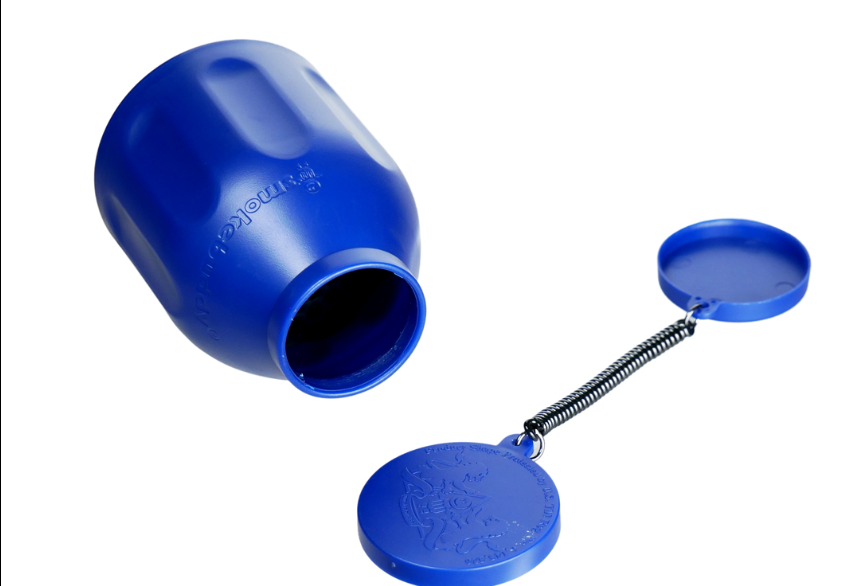
The properties covered above are exactly why activated carbon became the core material inside most personal air filters built for reducing smoke and odor during everyday use.
Manufacturers rely on this same adsorption process, just packaged into a compact, portable form factor. Scaling the material down for personal use does not change the underlying chemistry, only the size and shape of the carbon core involved.
This is the same process at work whether the carbon sits inside a large industrial filter or a small handheld device, which is really just how activated carbon absorbs odor applied at a smaller, more portable scale.
Why Filters Use Activated Carbon as a Core Material
A filter for smoking built around activated carbon takes advantage of the same porous structure and adsorption process described earlier, just scaled down into a device small enough to carry around.
This is a direct practical application of how activated carbon absorbs odor, translated from a laboratory concept into something usable during an actual session.
A personal filter for smoking works because the exhaled air passes directly through the carbon core, giving odor molecules a very short path to the material’s surface. This close contact between air and carbon is part of why these devices work as well as they do despite their small size.
Getting the Most Out of a Carbon-Based Filter
Choosing a paper based filter or a reusable carbon core mostly comes down to how often the device gets used and how much surface area is packed into the design.
An eco friendly air filter built from sustainably sourced carbon still relies on the exact same adsorption science, since the environmental sourcing does not change how the material physically interacts with odor molecules.
Replacing a filter before it becomes fully saturated keeps performance consistent instead of letting odor slip through unfiltered.
Paying attention to this replacement cycle is one of the simplest ways to keep the benefits of how activated carbon absorbs odor working as intended over time.
Final Thoughts
The science behind how activated carbon absorbs odor comes down to a porous structure with enormous surface area, combined with a molecular attraction process called adsorption rather than true absorption.
This combination lets a small amount of material capture a surprising number of odor molecules as air passes through it.
The process works well against many common odor sources, though it does have limits tied to saturation and the size of certain molecules.
Understanding the mechanics gives a clearer, more accurate picture of how activated carbon absorbs odor and why it became the standard material inside personal air filtering products.
FAQs
Is activated carbon absorption or adsorption?
Technically, it is adsorption, since odor molecules stick to the carbon’s surface rather than being pulled into its internal structure the way a sponge absorbs water. This distinction is the real answer underneath how activated carbon absorbs odor at a chemical level.
Why does activated carbon have so much surface area?
The activation process creates a dense network of microscopic pores throughout the material, which creates an enormous amount of internal surface area relative to its size.
Does activated carbon stop working over time?
Yes. Once the surface area of how activated carbon absorbs odor becomes saturated with trapped molecules, it can no longer adsorb new odor compounds as effectively, which is why filters need periodic replacement.
What types of odor does activated carbon handle best?
It performs well against larger organic compounds, including many found in smoke, food, and body odor, since these molecules interact well with its pore structure.
Can activated carbon capture every type of gas or smell?
No. Very small molecules with weak attraction to carbon’s surface chemistry are harder to capture compared to larger organic compounds commonly found in everyday odors.